Table of Contents
The Magic of Homemade Pistachio Baklava
There’s something almost magical about that first bite of pistachio baklava – the way the delicate phyllo shatters, giving way to the aromatic nut filling, all soaked in that perfectly sweet honey syrup that somehow manages to be rich without being cloying. I’ll never forget the first time I tried making this Turkish pistachio baklava at home. I was terrified of working with phyllo dough (spoiler alert: it’s actually not that scary!), but the end result was so worth facing that fear.
This pistachio baklava recipe has become my go-to for everything from holiday gatherings to casual weekend baking projects when I want something that feels a little special. The vibrant green pistachios not only add their distinctive flavor but create a stunning visual that makes this dessert as beautiful as it is delicious.
What I love most about pistachio baklava is how it brings together such simple ingredients – nuts, phyllo, butter, sugar, and honey – to create something truly extraordinary. And while it might look intimidating, I promise you can make this at home with amazing results!
What Makes Turkish Pistachio Baklava Special?
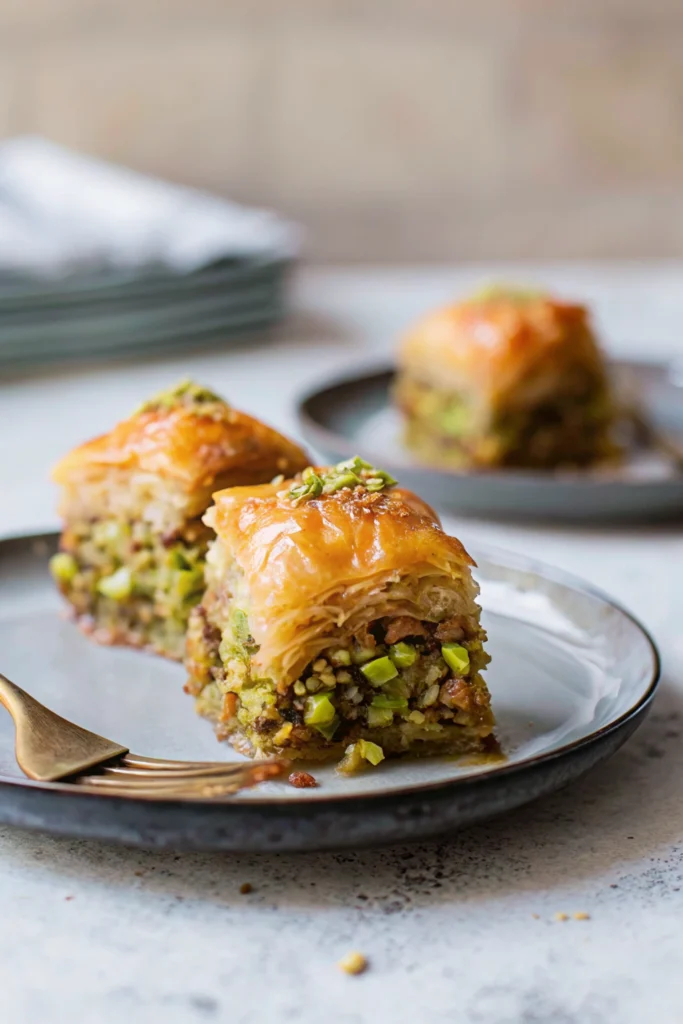
When we talk about pistachio baklava, we’re often referring specifically to Turkish pistachio baklava, which is considered by many to be the gold standard. The Turkish approach to baklava has been perfected over centuries, with techniques passed down through generations.
The Turkish Baklava Tradition
Turkish pistachio baklava has a few distinctive characteristics that set it apart. First, authentic Turkish baklava uses clarified butter (or ghee) rather than regular melted butter, which gives it an incomparable richness and prevents sogginess. The syrup is typically flavored with a touch of lemon juice and sometimes rose or orange blossom water for that signature floral note.
But perhaps most importantly, Turkish pistachio baklava celebrates the pistachio itself. Rather than mixing the nuts with walnuts or other fillers, a true Turkish pistachio baklava recipe lets the bright green nuts take center stage, grinding them to the perfect consistency – not too fine and not too chunky.
Regional Variations Worth Noting
While we’re focusing on the Turkish style today, it’s worth mentioning that nearly every country in the Mediterranean and Middle East has their own baklava variation. Greek versions often use honey-dominant syrup, while Lebanese baklava might incorporate rose water more prominently. Some regions layer the nuts throughout, while others concentrate them in the middle.
What they all share is that irresistible combination of crispy pastry, nuts, and sweet syrup that makes baklava one of the world’s most beloved desserts.
Ingredients You’ll Need for Perfect Pistachio Baklava
Let’s break down exactly what you’ll need to create this showstopper dessert in your own kitchen:
For the Baklava Layers:
- Phyllo dough: 1 package (about 16 oz), thawed according to package directions
- Pistachios: 2½ cups, shelled and unsalted (look for the brightest green ones you can find!)
- Sugar: ¼ cup granulated
- Cinnamon: 1 teaspoon (optional but adds wonderful warmth)
- Cardamom: ½ teaspoon ground (my secret ingredient that makes this baklava extra special)
- Clarified butter: 1 cup (you can make your own or use ghee)
For the Honey Syrup:
- Water: 1 cup
- Sugar: 1 cup
- Honey: ½ cup (use a good quality one – it makes a difference!)
- Lemon juice: 2 tablespoons fresh
- Orange blossom water: 1 tablespoon (optional but authentic)
- Cinnamon stick: 1 small
- Whole cloves: 3-4
Essential Equipment for Baklava Success
Before we dive into making our pistachio baklava, let’s make sure you have the right tools:
- 9×13 inch baking pan (a metal one works best for crisp edges)
- Food processor (for grinding the pistachios)
- Pastry brush (for applying butter)
- Sharp knife (for cutting the baklava before baking)
- Small saucepan (for the syrup)
Preparing the Pistachio Filling
The heart of any good pistachio baklava is, of course, the pistachios themselves. Here’s how to prepare them for the perfect filling:
Toast your pistachios in a dry skillet over medium heat for 5-7 minutes, stirring frequently. This step is optional but really enhances the nutty flavor. Let them cool completely.
Pulse the pistachios in your food processor until coarsely ground. You want some texture – not powder and not chunky pieces. Think the size of breadcrumbs. This usually takes about 10-12 pulses.
Mix the ground pistachios with sugar, cinnamon, and cardamom in a bowl. The cardamom isn’t traditional in all Turkish pistachio baklava recipes, but it adds an incredible aromatic quality that complements the pistachios beautifully.
Working With Phyllo Dough: Tips for Success
If you’re new to working with phyllo, don’t worry! I was terrified the first time, but with a few simple tricks, you’ll be handling it like a pro:
The Setup Is Everything
Before you unwrap your phyllo, get everything else ready. Have your clarified butter melted and slightly cooled with a pastry brush ready. Clear a large workspace and have a damp (not wet!) kitchen towel ready.
Handling the Delicate Sheets
When you unwrap the phyllo, cover it with the damp towel whenever you’re not actively taking a sheet. This prevents it from drying out and becoming brittle. Work quickly but don’t stress – even if some sheets tear, you’ll have many layers and no one will notice in the final product!
Brushing Technique Matters
When brushing the phyllo with butter, use a light touch starting from the center and working outward. You want an even coating but not so much that it pools. The butter is what will give your pistachio baklava those distinct flaky layers.
Assembling Your Pistachio Baklava
Now for the fun part – putting it all together!
Preheat your oven to 350°F (175°C) and brush your baking pan with clarified butter.
Start with a foundation of 6-7 phyllo sheets, brushing each one with butter before adding the next. This bottom layer creates a sturdy base for your baklava.
Sprinkle about ⅓ of your pistachio mixture evenly over the phyllo layers.
Add 2 buttered phyllo sheets, then another layer of nuts. Repeat this process until you’ve used all your nut mixture, finishing with at least 6-7 buttered phyllo sheets on top.
Trim any overhanging phyllo with scissors or a sharp knife.
Using a very sharp knife, cut your baklava into diamond shapes. This is much easier to do before baking! First make straight cuts to create squares, then diagonal cuts to form diamonds. For the most authentic Turkish pistachio baklava, cut all the way to the bottom of the pan.
Drizzle any remaining butter over the top, making sure it seeps into the cuts.
Baking to Perfection
Slide your prepared baklava into your preheated oven and bake for 45-50 minutes, until the top is golden brown and the edges have a deeper amber color. Your kitchen will fill with the most incredible buttery, nutty aroma – fair warning that neighbors might “happen” to stop by!
While the baklava bakes, it’s the perfect time to prepare your syrup.
Creating the Perfect Honey Syrup
The syrup is what transforms the baked layers into that gloriously sweet, sticky dessert we all crave. Here’s how to nail it:
Combine all syrup ingredients (water, sugar, honey, lemon juice, orange blossom water if using, cinnamon stick, and cloves) in a small saucepan.
Bring to a gentle boil, then reduce heat and simmer for about 15 minutes until slightly thickened. It should coat the back of a spoon but still be quite fluid – it will thicken more as it cools.
Remove the whole spices and let the syrup cool to room temperature. This is important! Cold syrup on hot baklava (or hot syrup on cold baklava) is the secret to getting that perfect texture.
The Magic Moment: Adding the Syrup
Here’s where the real transformation happens:
As soon as the baklava comes out of the oven, slowly and carefully pour the room-temperature syrup over the hot baklava, making sure to get it into all the cut lines.
You’ll hear a satisfying sizzle as the syrup hits the hot pastry – that’s the sound of deliciousness in the making!
Let it rest uncovered for at least 4 hours, ideally overnight. This resting period allows the syrup to fully penetrate all the layers and for the flavors to meld together perfectly.
Serving and Storing Your Pistachio Baklava
When you’re ready to serve, use a sharp knife to cut through your pre-cut lines again, ensuring clean edges. For an extra special presentation, garnish with additional finely chopped pistachios on top.
Turkish pistachio baklava is traditionally served at room temperature with strong Turkish coffee or tea. The bitter coffee provides the perfect contrast to the sweet baklava.
If you’re wondering about pistachio baklava calories, each piece contains approximately 250-300 calories – but I firmly believe some treats are worth every calorie, and this is definitely one of them!
Storage Tips for Maximum Freshness
Properly stored, your homemade pistachio baklava will keep well for up to 2 weeks:
- Store at room temperature in an airtight container.
- Place parchment paper between layers if you need to stack the pieces.
- Never refrigerate baklava as it can make the phyllo soggy.
- If you want to freeze it, do so before adding the syrup, then thaw and add fresh syrup later.
Troubleshooting Common Baklava Issues
Even experienced bakers sometimes run into challenges with baklava. Here are solutions to the most common problems:
Soggy Bottom Layers
If your bottom layers end up soggy, you likely used too much butter or syrup. Next time, use a lighter hand with the butter brush and make sure your syrup has the right consistency.
Dry Baklava
If your pistachio baklava feels dry, the syrup probably didn’t penetrate all layers. Make sure to pour it slowly and evenly, and consider poking a few tiny holes with a toothpick to help it seep through.
Phyllo Tears Easily
If your phyllo is tearing excessively, it’s likely too dry. Keep it covered with a damp towel at all times when not in use, and work quickly but gently.
Variations on Classic Pistachio Baklava
While traditional Turkish pistachio baklava is divine, here are some delicious variations to try:
Mixed Nut Baklava
Combine pistachios with walnuts and almonds for a more complex flavor profile. Keep the same total quantity of nuts but mix up the varieties.
Chocolate Drizzled Pistachio Baklava
After your baklava has completely cooled, drizzle melted dark chocolate over the top for a modern twist that’s absolutely irresistible.
Pistachio Rose Baklava
Replace the orange blossom water with rose water and add 1-2 tablespoons of crushed dried rose petals to the nut mixture for a floral variation that’s popular in many Middle Eastern countries.
The Health Benefits of Pistachios
While pistachio baklava is definitely a treat, pistachios themselves offer some impressive nutritional benefits:
- Rich in antioxidants
- Good source of protein and fiber
- Contain heart-healthy fats
- Provide essential vitamins and minerals
So while I wouldn’t classify baklava as health food, the pistachio filling does add some nutritional value to this sweet indulgence!
FAQ: Everything You Wanted to Know About Pistachio Baklava
How do I know when my baklava is done baking?
Your pistachio baklava is done when the top is a rich golden brown color and you can see the edges turning slightly darker. The phyllo should look crisp and flaky, not pale or doughy.
Can I make pistachio baklava ahead of time for a party?
Absolutely! In fact, pistachio baklava actually improves with a day or two of rest as the flavors meld together. It’s perfect for making 1-2 days before your event.
What’s the difference between Turkish and Greek baklava?
Turkish pistachio baklava typically uses pistachios as the primary or only nut, while Greek versions often use walnuts. Turkish syrup contains more sugar and less honey than Greek versions, which tend to be honey-forward. Turkish baklava also often includes slightly different spices.
Why is my phyllo dough cracking?
Phyllo cracks when it dries out. Keep it covered with a damp kitchen towel at all times when you’re not actively working with a sheet. Work quickly but carefully, and don’t worry if some sheets tear – with multiple layers, no one will notice!
How many calories are in pistachio baklava?
A typical piece of pistachio baklava contains about 250-300 calories, depending on size and specific ingredients. The combination of nuts, butter, and syrup makes it an energy-dense treat – but so worth it for special occasions!
Let’s Make This Pistachio Baklava Together!
I hope this detailed guide has inspired you to try making pistachio baklava in your own kitchen! Yes, it requires a bit of patience and care, but the results are so rewarding – there’s nothing quite like sharing homemade baklava with friends and family and watching their faces light up with that first bite.
Have you tried making Turkish pistachio baklava before? Do you have any family secrets or special techniques you use? I’d love to hear about your experiences in the comments below! And if you make this recipe, please share a photo of your creation – seeing your successes makes my day!
Until next time, happy baking and enjoy every sweet, flaky, pistachio-filled bite!
Hungry for more? Check out our top rated recipes :