Table of Contents
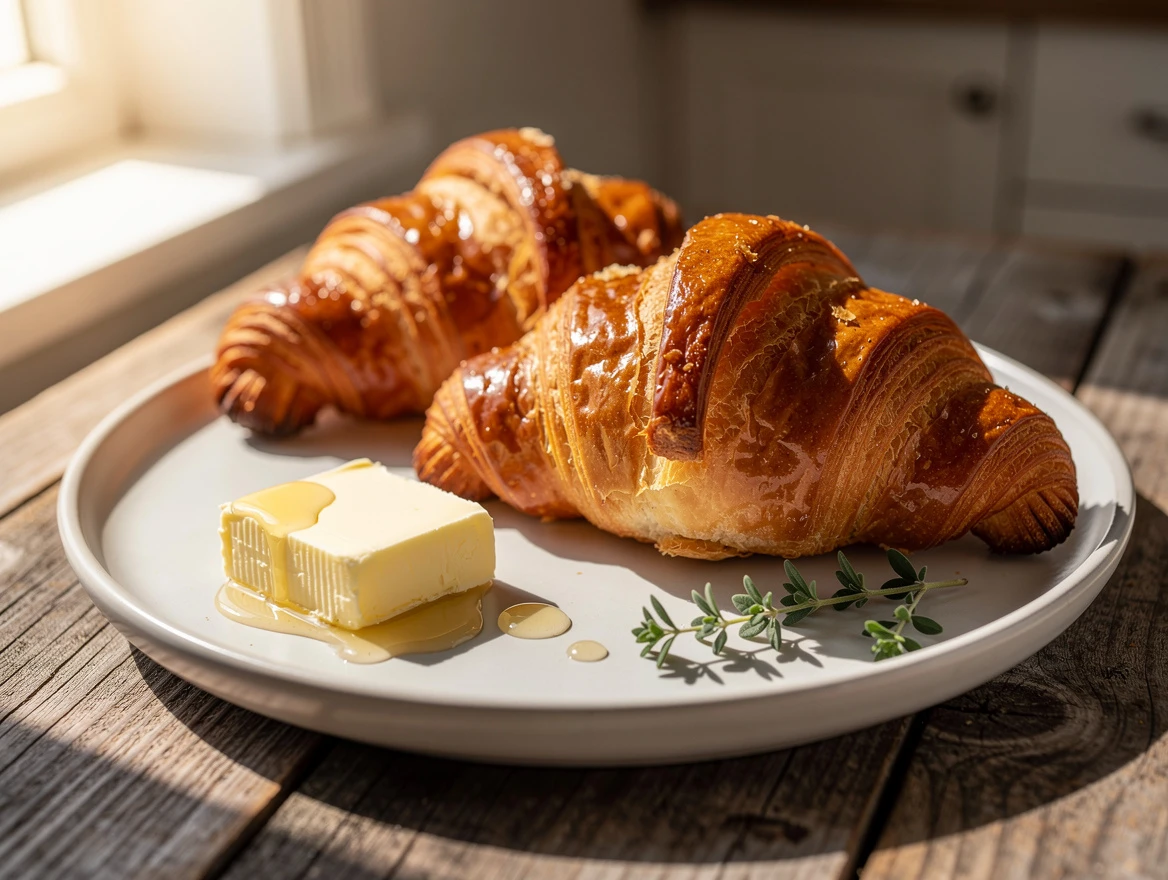
There’s nothing quite like the smell of freshly baked French croissants filling your kitchen. These homemade French croissants have crisp, golden layers on the outside and a light, buttery center that makes every step of the process worth it.
Making croissants at home takes some patience, especially when it comes to laminating the dough, but the result is incredibly rewarding. This step-by-step recipe will guide you through preparing the dough, creating the butter block, folding and laminating the dough, shaping the croissants, and baking them until beautifully golden and flaky.
And if you want to enjoy them in a fun new way, try the viral croissant and ice cream trend with your freshly baked homemade croissants!
Recipe at a Glance
- Recipe: Homemade French Croissants
- Prep Time: 2 hours 30 minutes, including chilling
- Cook Time: 15 minutes
- Servings: 8 croissants
- Difficulty: Intermediate
- Cuisine: French
- Best For: Breakfast, brunch, or dessert
Ingredients
For the Dough
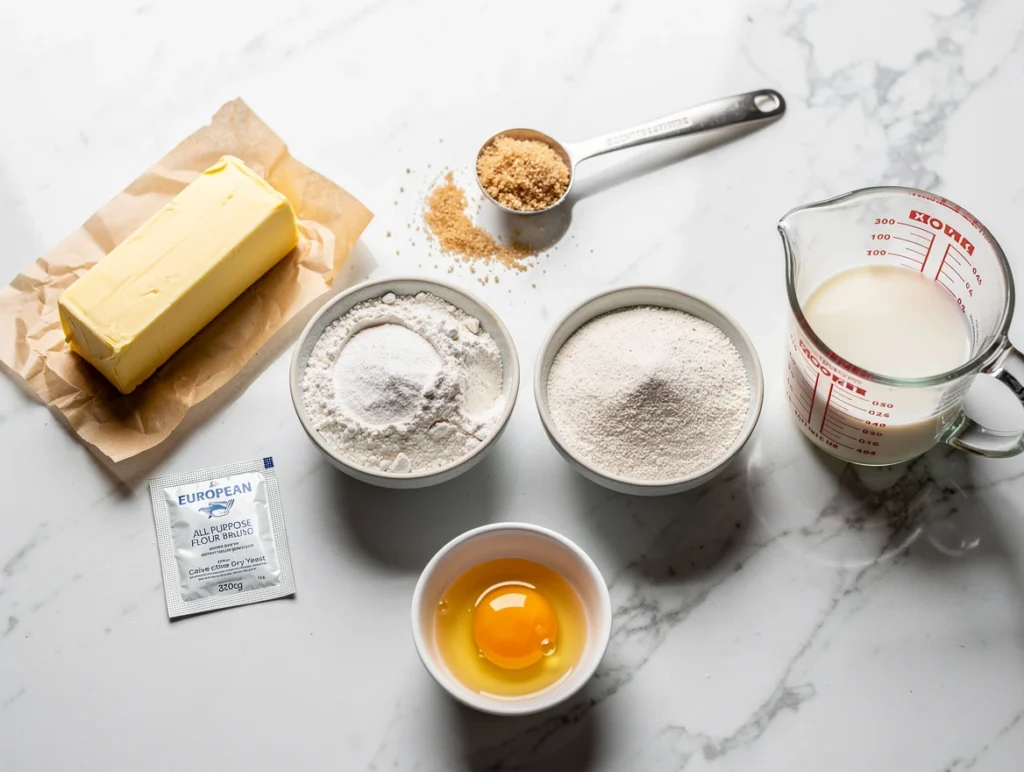
- 250 g all-purpose flour
- 1 teaspoon active dry yeast
- 1 tablespoon coconut sugar
- 1 teaspoon salt
- 150 ml cold whole milk
- 2 tablespoons unsalted butter, melted and cooled
For the Butter Block
- 200 g unsalted European-style butter
European-style butter is a great choice for croissants because its higher fat content works particularly well for laminating and creates rich, tender layers.
For the Egg Wash
- 1 egg yolk
- 1 tablespoon water
Equipment You’ll Need
- Large mixing bowl
- Rolling pin
- Parchment paper
- Baking sheet
- Sharp knife or pizza cutter
- Pastry brush
- Plastic wrap
- Cooling rack
- Kitchen scale
A kitchen scale is highly recommended because accurate measurements are especially important when making laminated dough.
How to Make Homemade French Croissants
1. Make the Dough
In a large bowl, whisk together the flour, yeast, coconut sugar, and salt.
Add the cold milk and cooled melted butter. Mix until the ingredients come together and form a shaggy dough.
Knead the dough for about 5 minutes, until it becomes smoother and more elastic.
Shape the dough into a rectangle, wrap it tightly in plastic wrap, and refrigerate for about 30 minutes.
2. Prepare the Butter Block
Place the butter slices between two sheets of parchment paper.
Using a rolling pin, gently roll the butter into an approximately 6 x 6-inch square. Try to keep the thickness as even as possible.
Place the butter block in the refrigerator until it is cold but still flexible.
The butter should be firm enough to hold its shape but soft enough to roll without cracking.
3. Start Laminating the Dough
Remove the chilled dough and roll it into approximately a 10 x 10-inch square.
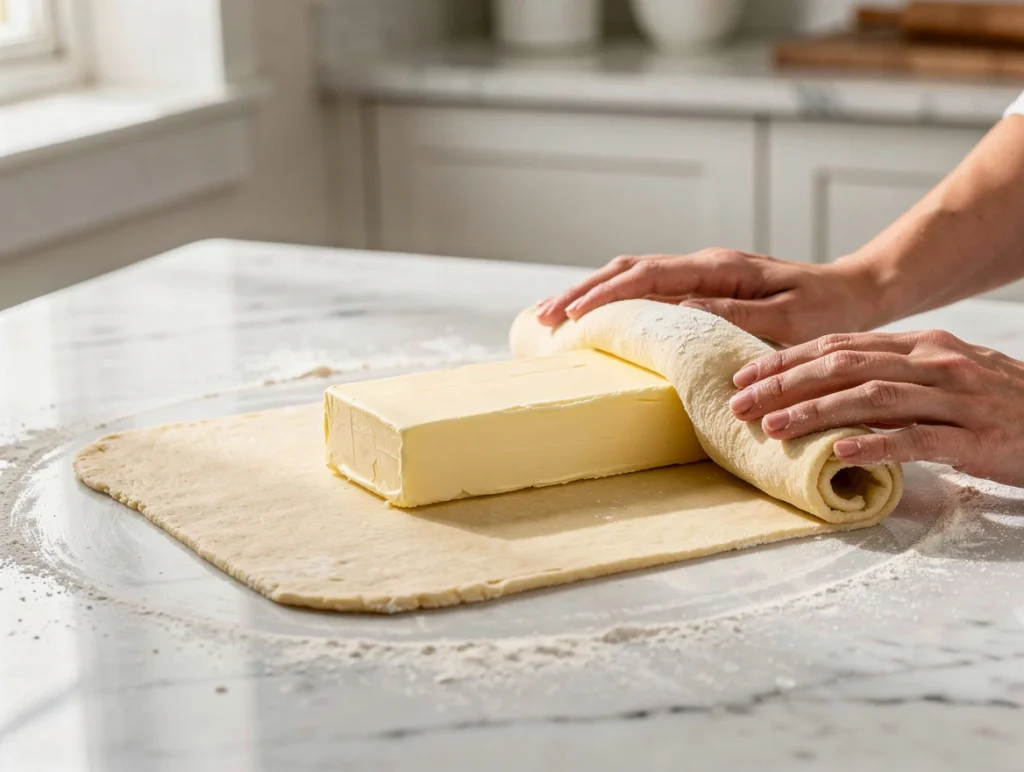
Place the butter block over one side of the dough, then fold the dough over the butter and seal the edges.
Gently roll the dough into a rectangle approximately 20 x 10 inches long.
Work carefully and avoid pressing too hard, especially if the butter starts becoming soft.
4. Fold the Dough
Fold the dough into thirds, similar to folding a letter.
Wrap the dough in plastic wrap and refrigerate for about 30 minutes.
Repeat the rolling and folding process two more times, chilling the dough between each fold.
Keeping the dough cold during this process is essential. If the butter starts melting or the dough becomes difficult to handle, return it to the refrigerator before continuing.
5. Roll and Cut the Croissants
After the final fold and chill, roll the dough into a long rectangle, approximately 20 x 8 inches.
Using a sharp knife or pizza cutter, cut the dough into 8 triangles.
Make a small slit at the base of each triangle if desired, then gently stretch the triangle and roll it from the wide end toward the tip.
Place each shaped croissant on a parchment-lined baking sheet, leaving enough space between them for rising.
6. Proof the Croissants
Cover the croissants loosely and let them proof in a warm, draft-free area until they become noticeably puffy and lighter.
This may take around 45 minutes, but the exact time depends on the temperature of your kitchen.
Don’t rely only on the clock. Properly proofed croissants should look airy and have a slight jiggle when you gently move the baking tray.
Avoid placing them somewhere too warm because excessive heat can cause the butter to melt.
7. Add the Egg Wash
Preheat your oven to 375°F (190°C).
Whisk together the egg yolk and water.
Gently brush the tops of the proofed croissants with the egg wash, taking care not to press down on the delicate dough.
8. Bake
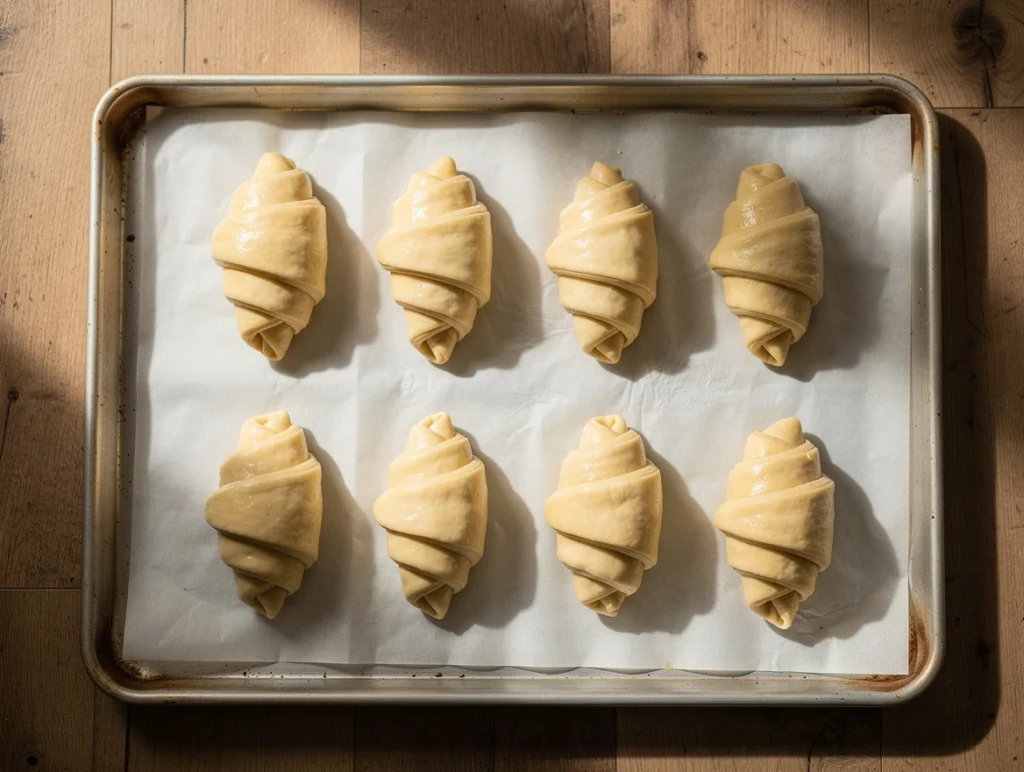
Bake for approximately 15 minutes, or until the croissants are puffed, golden brown, and flaky.
Keep an eye on them toward the end of baking because oven temperatures can vary.
9. Cool and Serve
Allow the croissants to cool on a wire rack for about 10 minutes before serving.
Enjoy them warm with coffee, tea, fresh fruit, or your favorite spread.
Tips for Perfect Homemade French Croissants
Keep the Dough and Butter Cold
Temperature is one of the most important factors when making croissants. If the butter becomes too warm, it can melt into the dough instead of creating separate layers.
If the dough becomes difficult to roll or the butter starts feeling soft, stop and refrigerate it.
Use Good-Quality Butter
European-style unsalted butter is an excellent choice for croissants. Its higher fat content can help create rich flavor and beautiful laminated layers.
Don’t Rush the Proofing
Under-proofed croissants can turn out dense instead of light and airy.
Look for croissants that are visibly puffy and have a slight jiggle before baking.
Use a Sharp Knife
A sharp knife or pizza cutter will help you make clean cuts without crushing the layers of dough.
Avoid Overworking the Dough
Roll gently and avoid excessive pressure. You want to maintain the layers you’ve worked hard to create.
How to Tell When Croissants Are Properly Proofed
Knowing when your croissants are ready for the oven can be tricky.
Properly proofed croissants should:
- Look noticeably larger and puffier
- Feel light and airy
- Show visible layers
- Have a slight jiggle when the tray is gently moved
If they still look dense and firm, give them more time.
Proofing time depends on your room temperature, so use the appearance and texture of the croissants as your main guide.
Why Aren’t My Croissants Flaky?
If your homemade French croissants aren’t as flaky as expected, one of these issues may be responsible:
- The butter became too warm during lamination.
- The dough wasn’t chilled enough between folds.
- The dough was rolled too aggressively.
- The croissants were under-proofed.
- The oven wasn’t fully preheated.
- The butter and dough had very different consistencies.
The most important rule is simple: keep the dough and butter cold and work gently.
Common Croissant Problems and How to Fix Them
| Problem | Possible Cause | Solution |
|---|---|---|
| Butter leaking out | Dough or butter too warm | Chill the dough and butter before continuing |
| Croissants are dense | Under-proofing | Allow more time for the croissants to become puffy |
| Croissants aren’t flaky | Poor lamination or warm butter | Keep everything cold and roll gently |
| Croissants are dry | Overbaking | Check them early and bake until just golden |
| Dough tears while rolling | Dough too cold or dry | Let it rest briefly before rolling |
| Croissants spread during baking | Over-proofing or warm butter | Monitor proofing and keep the dough cool |
How to Store Homemade French Croissants
Allow the croissants to cool completely before storing them.
Place them in an airtight container and keep them at room temperature for up to 2 days.
For the best texture, reheat them in a preheated oven at 300°F (150°C) for about 5 minutes.
Avoid microwaving them if you want to maintain their crisp, flaky exterior.
Can You Freeze Homemade French Croissants?
Yes! You can freeze both baked and unbaked croissants.
Freezing Baked Croissants
Let the croissants cool completely, then place them in an airtight freezer-safe bag or container.
Freeze for up to about 1 month for the best quality.
Reheat them in a preheated oven until warmed through and crisp.
Freezing Before Baking
You can also freeze shaped croissants before baking.
Place the shaped croissants on a lined tray and freeze until firm. Transfer them to a freezer-safe container or bag.
When you’re ready to bake them, allow them to thaw and proof properly before applying the egg wash and baking.
Try the Viral Croissant + Ice Cream Trend
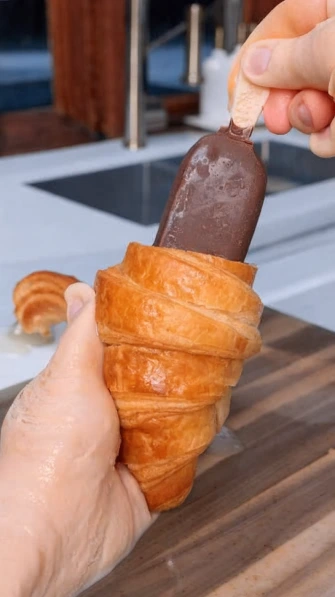
Want to take your homemade French croissants to the next level?
Try the viral croissant + ice cream trend! 🥐🍦
Once your croissant has cooled slightly, slice it open and add a scoop of your favorite ice cream.
The combination of a warm, buttery, flaky croissant with cold and creamy ice cream is absolutely delicious.
It’s a simple dessert, but using a homemade French croissant makes the experience even better because you get those fresh, crisp layers in every bite.
Tip: Try vanilla, chocolate, pistachio, or your favorite ice cream flavor.
This is also a great way to turn leftover croissants into an easy dessert.
What to Serve With Homemade French Croissants
Homemade croissants are delicious on their own, but you can also serve them with:
- Fresh berries
- Fruit preserves
- Honey
- Nut butter
- Fresh fruit
- Scrambled eggs
- Coffee
- Tea
- Vanilla ice cream
- Chocolate ice cream
For a brunch spread, serve them alongside fresh fruit, eggs, and coffee.
Nutrition Information
Approximate nutrition per 1 croissant:
| Nutrient | Amount |
|---|---|
| Calories | 205 kcal |
| Protein | 4 g |
| Total Carbohydrates | 15 g |
| Fiber | 3 g |
| Net Carbohydrates | 12 g |
| Sugar | 2 g |
| Fat | 14 g |
| Sodium | 210 mg |
Note: Nutrition information is an estimate and can vary depending on the brands and ingredients used. If you make substitutions, especially with flour or milk, the nutritional values will change.
If you’re reducing carbohydrate intake, a flour blend specifically designed for low-carb yeast baking can be tested, but the texture, rise, and final result may differ from traditional French croissants.
Expert External Resources for Further Reading
Internal HomemadeCooks Links for Healthy Eating
FAQs About Homemade French Croissants
Can I use all-purpose flour for homemade French croissants?
Yes. All-purpose flour works well for homemade croissants and gives you a classic flaky texture. For the most consistent results, use a good-quality flour and measure it with a kitchen scale.
How many folds do croissants need?
This recipe uses three rounds of folding, with chilling between each fold. These folds create the thin layers of butter and dough that give French croissants their signature flaky texture.
Why aren’t my croissants flaky?
Croissants may not turn out flaky if the butter becomes too warm, the dough is overworked, the layers are compressed during rolling, or the croissants are under-proofed. Keeping both the dough and butter cold during lamination is one of the most important steps.
Why is butter leaking out of my croissant dough?
Butter can leak out when the dough or butter becomes too warm, or when the butter block is not the right consistency. Chill the dough whenever it becomes difficult to roll, and make sure the butter is cold but flexible rather than hard or melted.
How do I know when my croissants are fully proofed?
Properly proofed croissants should look noticeably puffy and lighter. If you gently shake the baking tray, they should have a slight jiggle. Avoid baking them while they still look dense or firm.
Can I make croissant dough the night before?
Yes. You can prepare the dough and keep it chilled overnight. This can make the baking process easier and gives the dough additional time to rest.
Can I freeze homemade croissants before baking?
Yes. Shape the croissants, place them on a lined tray, and freeze them until firm. Transfer them to an airtight freezer-safe container or bag. When you’re ready to bake, allow them to thaw and proof properly before applying the egg wash and baking.
Can I freeze baked croissants?
Yes. Let the baked croissants cool completely before freezing them in an airtight freezer-safe bag or container. They can be frozen for up to about one month for the best quality.
What is the best butter for making French croissants?
European-style unsalted butter is an excellent choice because it generally has a higher fat content and works well for lamination. Choose butter that is cold but flexible enough to roll without cracking.
Can I use a low-carb flour blend?
You can experiment with a low-carb flour blend, but the results may differ from traditional croissants. All-purpose flour provides the most reliable structure, rise, and flaky layers. If using a low-carb blend, choose one specifically formulated for yeast baking.
Can I make the viral croissant and ice cream trend with homemade croissants?
Absolutely! Once your homemade croissants have cooled, slice one open and add a scoop of your favorite ice cream. The combination of crisp, buttery pastry and cold, creamy ice cream makes a delicious dessert.
How should I store leftover homemade croissants?
Store completely cooled croissants in an airtight container at room temperature for up to 2 days. For longer storage, freeze them and reheat them in a preheated oven to help bring back their crisp texture.
Final Tips for Homemade French Croissants
Making French croissants at home requires patience, but the process becomes much easier once you understand the importance of temperature, lamination, and proofing.
For the flakiest results, remember these three things:
Keep the butter cold.
Don’t rush the proofing.
Roll the dough gently.
Once you master those steps, you’ll be able to make beautiful homemade French croissants with golden, crisp layers and a buttery interior.
And don’t forget to try them with ice cream for the viral croissant dessert trend! 🥐🍦